
What Europe
will not name
In late September, L’Express revealed a French government note on Russian threats, written for a meeting at the Élysée [1]. Most of its forecasts were familiar: more sabotage, more cyberattacks. But among the worst cases stood a line I read twice: the assassination of a European commissioner.
It is a scenario, not a prediction, and nobody claims there is an ongoing plot. What struck me, however, was how little it surprised me. For two years I have tracked incidents that European governments tend to treat one at a time, quietly, as police matters. On their own, each is easy to dismiss. Put next to each other, they reveal a pattern we cannot afford to ignore.
Four cases
London.
In May 2025 someone set fire to a car and two houses linked to Keir Starmer, then prime minister. A jury convicted two men this June [2]. They had taken instructions online from a Russian speaker who asked for videos of the fires. The police never established who he was. On the day of the verdict the BBC reported evidence pointing to a young Russian diplomat, with the caveat that it could not be certain, and the Financial Times traced the handler to Russia [3]. British officials said publicly that they had no evidence of state sponsorship. Moscow denies everything.
Brussels.
In December 2025 the Guardian reported that Belgian politicians and the executives of Euroclear had been subjected to intimidation, which European intelligence sources put down to Russian military intelligence [4]. Euroclear holds most of the frozen Russian central bank reserves, some 185 billion euros, and the question on the table that month was whether Europe would use them for Ukraine. Prime Minister Bart De Wever was reportedly among those targeted. The sources did not agree on how serious the threats were. They agreed that there were threats.
The European Parliament.
Colleagues have found their car windows smashed. Russian propaganda books have arrived at their home addresses, by post or left on the doorstep. Pina Picierno, one of the Parliament’s vice-presidents and no political ally of mine, now moves with a police escort [5]. I put these incidents in a memo last spring, and POLITICO reported on it in May [6].
Helsinki.
On 1 October the Speaker of the Finnish parliament confirmed that a considerable number of members believe someone has been in their homes over the past year [7]. Yle puts the number below twenty [8]. Doors stood open and lights were on, yet nothing was stolen and no lock was forced. The Speaker said the traces may have been left to be found. The police have opened a preliminary inquiry, the security service will not comment on who might be behind it, and the head of military intelligence says that entering politicians’ homes belongs to the Russian repertoire [9]. The prime minister called foreign involvement “very possible” [10]. Iltalehti reports that no ministers are among the known cases [11], and the prime minister says the government is checking its own people. Finland holds elections in the spring.
I do not know who walked through those flats, and I will not claim more than the evidence carries. But the four cases share a shape. A home, a car, a private address. Nobody physically hurt. Nothing a prosecutor could pin on a state. And every target is someone whose job is to make decisions about Russia.
What fear does
Why should anyone lose sleep over a few politicians?
Consider the numbers. Finland has two hundred members of parliament for five and a half million people, so each of them carries the voice of some twenty-eight thousand citizens. Whoever manages to ignite fear on one member has put a hand on twenty-eight thousand votes, and no ballot box has been touched.
This is why Moscow rates the method as highly as it does. Clausewitz defined war as an act of force to compel the enemy to do our will. The force is only the means, and the bent will is the aim. If a will can be bent with a paperback left on a doormat, the aim of a war has been reached for the price of a courier. Russia’s chief of the general staff argued in 2013 that non-military means had in many cases become more effective than weapons. There is also a practical note that any staff officer can see. A brigade that crosses the border meets Article 5. A man paid a small sum through a messaging app to break a car window meets, at worst, a district court.
Russia understands this better than we do, because it is how Russia itself is governed, and because it guards its own leadership accordingly. Its president has received foreign leaders across a table several metres long. A Finnish member of parliament takes the tram home to a flat with an ordinary lock. I would not change this, because it is what an open society looks like. But we should be clear that our openness has been noticed, and by whom.
None of this is new to a Finn. In the Soviet decades our leading politicians each had their own man at the embassy. We called him the kotiryssä, the house Russian, and joked about it, which is what one does with things one cannot change. Later the instrument became money. In August 2008, with the war in Georgia days old, Finland’s former prime minister Paavo Lipponen signed on as a consultant to Nord Stream after meeting its chief executive and Gerhard Schröder [12]. All of it was legal. That was rather the point. Since 2022 a seat on a Russian board has become worthless and dangerous to accept, and my reading is that fear has been promoted to do the work money used to do. The lists Russia keeps of European officials, journalists and members of parliament, which the European Parliament condemned in September as an instrument of hybrid warfare [13], are that shift made visible.
The effect I worry about most leaves no trace at all. A speech is toned down. A colleague decides that the sanctions dossier is someone else’s job this term. Nobody has threatened them. They have simply read the news. I call this Tier Zero, because it sits underneath everything our analysts count [14], and I suspect it is the most successful Russian operation in Europe.
Nobody’s survival is at stake in what I am describing. What is at stake is who does the deciding.
Acting without a verdict
There are respectable reasons for silence: thin evidence, sources to protect, trials under way. But there is a less comfortable one. To say that a foreign state is coercing your head of government is to describe an attack on your political independence, and that demands an answer of matching weight. So, the incident is filed as arson or harassment. Self-deterrence does its work in the choice of words.
Meanwhile the information reaches the public anyway. In London it came from the BBC and the Financial Times, in Brussels from the Guardian, in Paris from L’Express. Whether by design or not, governments are letting newspapers say what they will not say themselves.
Berlin shows the alternative. On 1 September, Germany formally attributed an attempted attack at Leipzig airport to Russia and announced its response at the same time [15]. Attribution is something a government does when it is ready to pay for it.
Finland’s instinct is to wait for the court. The Eagle S should cure us of that habit. The tanker dragged its anchor across five cables on Christmas Day 2024. Twenty-one months and two contradictory rulings on jurisdiction later, there is still no trial on guilt [16, 17]. Yet Finnish authorities boarded and seized the ship within a day, and NATO launched a patrol mission within three weeks [18]. I am not criticising the judges; courts should be slow. But every act in this campaign is built to fall just short of what a court could pin on a state.
The answer is neither to bend the law nor to declare an emergency. A state needs practical judgment in what I have long called the grey time, the condition of being neither at war nor at peace. In practice, that means matching the response to what we know. Protecting people requires no proof. Counter-intelligence can start from a pattern. Expelling diplomats needs no verdict. Only a formal accusation, and anything resembling retaliation, should wait for high confidence. These powers belong in law, written in calm times and reviewed by courts and parliaments, and they must never be turned on our own citizens.
What I would do
Those of us who live next to Russia have learned that an act left unanswered is repeated. Four things should follow.
First, protect people now. Finland should raise the security of its political leadership, MPs included, without waiting for the inquiry to conclude.
Second, write a duty to warn into law across the Union, so that people learn when they appear in an adversary’s files. The head of Rheinmetall learned from the Americans that there was a plan to kill him [19].
Third, name the method, even where we cannot name the author of each act. If the EU and NATO jointly declare that intimidating decision-makers is an attack on political independence, no government has to carry that cost alone. Parliaments can go first, since a resolution commits no government to retaliate.
Fourth, make the answer automatic. Each incident should be followed by something Moscow does not want: another tranche for Ukraine, more tankers on the sanctions list. A campaign meant to make supporting Ukraine feel dangerous should produce the opposite.
There is a risk in everything I have written. A country that sees Moscow behind every unlocked door has done the intimidator’s work for him. So, my claim has to be testable. If the Finnish cases turn out to have nothing to do with the members’ work on Russia, if the traces differ from flat to flat, or if most of the reports came only after parliament asked its members to look around, I will say so.
People ask me whether I am on a list. With these lists you never know, which is how they are meant to work. I have decided to behave as though I were not. That is the only defence available to an individual. The states we have built, however, can and should do better.
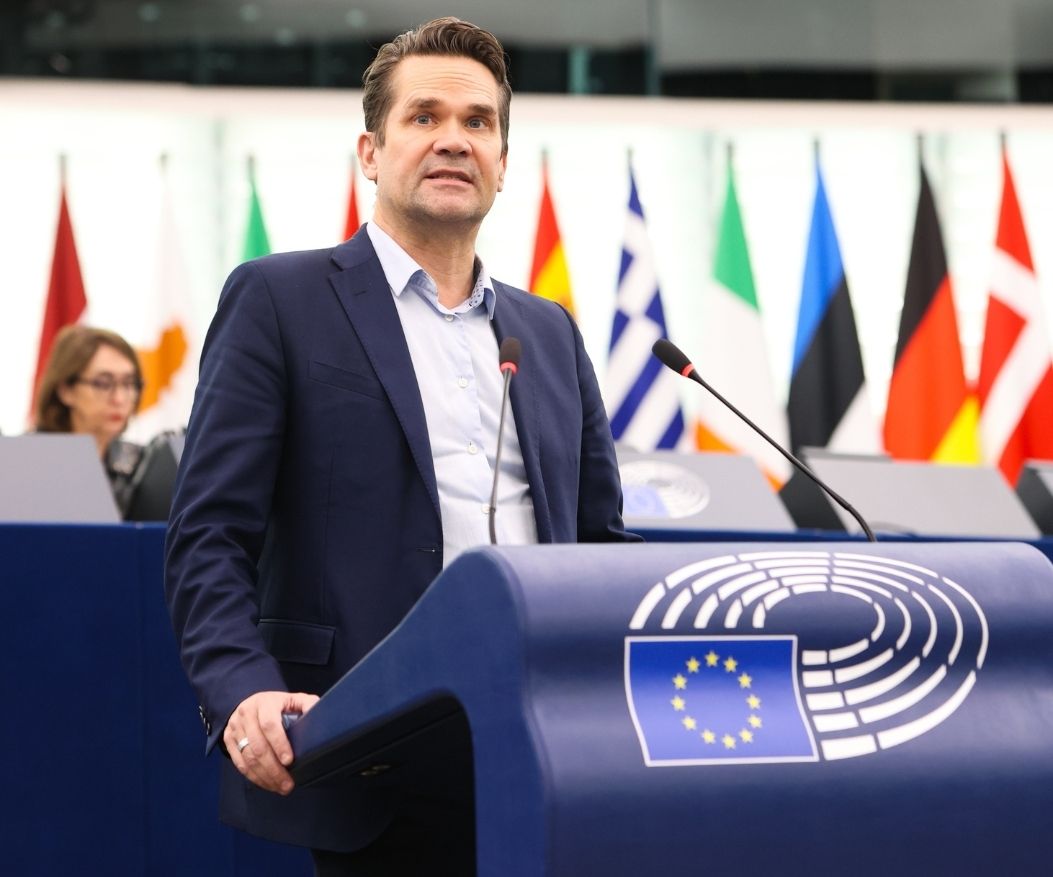
Mika Aaltola is a Member of the European Parliament (EPP) and a leading Finnish expert on foreign and security policy. His areas of expertise include geopolitics, EU defence policy, transatlantic relations and Arctic strategy.
References
- L’Express, Etienne Girard and Elsa Trujillo, “Attentats, sabotages, assassinats : la note secrète qui détaille les scénarios d’une attaque russe en France”, 29 September 2026.
- Al Jazeera, “UK court convicts two over PM-targeting plot run by mysterious Russian”, 15 June 2026.
- BBC News, Daniel De Simone, Tom Beal and Olga Malchevska, “Russia was behind arson attacks targeting PM, BBC reveals”, 15 June 2026; Financial Times, Miles Johnson, Helen Warrell and Elizabeth Bratton, “Arson targeting Keir Starmer properties originated in Russia”, 15 June 2026.
- The Guardian, Dan Sabbagh and Jennifer Rankin, “Belgian politicians and finance bosses targeted by Russian intelligence over seized assets”, 17 December 2025.
- ANSA, “Disposta la tutela per l’europarlamentare Pina Picierno”, 5 June 2025.
- POLITICO, Brussels Playbook: “Europe first … America last?”, 8 May 2026.
- Verkkouutiset, “Kansanedustajien koteihin on epäillysti tunkeuduttu – tämä asiasta tiedetään”, 1 October 2026.
- Yle, “Ylen tiedot: Tällaisia ovat epäillyt tunkeutumiset kansanedustajien koteihin”, 1 October 2026.
- MTV Uutiset, Antti Mälkönen, “Kansanedustajien koteihin on tunkeuduttu – tiedustelupomo MTV:lle: Osa Venäjän keinoja”, 1 October 2026.
- Verkkouutiset, “Petteri Orpo: On ‘hyvin mahdollista’, että kyse vieraan vallan vaikuttamisesta”, 1 October 2026.
- Iltalehti, coverage of 1 October 2026: “IL:n tiedot: Epäiltyjä tunkeutumisia on nyt noin 20 – Kansanedustaja huomasi vessanpöntössään jotain outoa” and “Kansanedustajien koteihin tunkeuduttu – Nyt puhuu Petteri Orpo”.
- The Barents Observer, “Former Finnish PM to lobby Russian pipeline”, 18 August 2008.
- European Parliament, report of the Special Committee on the European Democracy Shield, A10-0199/2026, adopted 15 September 2026, Legislative Observatory summary; see also The Brussels Times, “MEPs urge tougher stance as EU targets foreign election interference”, 15 September 2026.
- Mika Aaltola, “On the Russian blacklist”, 26 June 2026.
- German Federal Government, “Entschlossenes Vorgehen gegen hybriden Angriff”, 4 September 2026, on the attribution announced on 1 September 2026.
- Ilkka-Pohjalainen (STT), “Syyttäjä valittaa Eagle S -tuomiosta hovioikeuteen”, 9 October 2025.
- Helsinki Court of Appeal, press release on the Eagle S decision, R 16/2025/2572, 27 August 2026.
- Centre for Eastern Studies (OSW), “Baltic Sentry: NATO’s enhanced activity in the Baltic Sea”, 15 January 2025.
- CNN, Katie Bo Lillis, Natasha Bertrand and Frederik Pleitgen, “Exclusive: US and Germany foiled Russian plot to assassinate CEO of arms manufacturer sending weapons to Ukraine”, 11 July 2024.
Hajauttamisen aika
Hajauttamisen aikaYhden varassa eläminen on vaarallista. Sen tietää jokainen, joka on kasvanut...
Kumpi Suomi?
Kumpi Suomi?Suomea tarjotaan taas malliksi. Kuulen sen käytävillä Brysselissä, ja aina samalla...
Venäjän mustat listat: Euroopan katvealue
Venäjän mustat listat: Euroopan katvealueLista on vanha. Uutta on se, mitä Venäjä sillä tekee....
0 kommenttia